
News
Violet printing plates occupy a very practical position in modern prepress. They are not always the loudest topic in plate discussions, especially when thermal CTP systems are heavily promoted, but in many production environments violet plates remain a smart, economical, and technically reliable choice. For newspaper plants, book printers, commercial offset shops, and packaging-related short to medium run work, violet CTP technology offers a strong balance of imaging speed, plate consistency, and operating cost.
At HC Aluminum, we look at violet printing plates from the production floor outward: how the aluminum base behaves, how stable the coating is, how cleanly the image develops, and how reliably the plate runs on press. A plate is not just a consumable sheet. It is the first physical carrier of the customer's image, and small differences in coating uniformity, sensitivity, or storage stability can become visible as waste, downtime, or color variation.
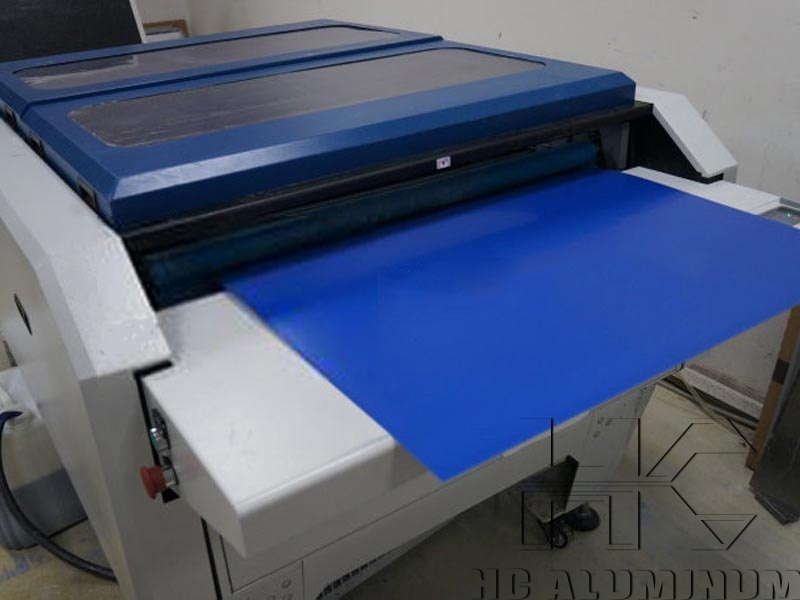
What are violet printing plates?
Violet printing plates are CTP plates designed for exposure by a violet laser, commonly around 405 nm. Most violet CTP plates use highly sensitive photopolymer or silver-halide based coatings. In practical use today, photopolymer violet plates are widely adopted because they provide good durability, clean processing, and stable performance in high-speed plate setters.
Violet plates are usually negative-working plates. This means the exposed image areas harden during laser imaging and remain on the plate after processing, while the non-image areas are removed. The result is an oleophilic image area that accepts ink and a hydrophilic non-image area that accepts fountain solution.
The main attraction is sensitivity. A violet laser requires relatively low energy to expose the coating, so imaging can be very fast. This is why violet systems are common in newspaper production, where hundreds or thousands of plates may be needed in a tight nightly window. For printers evaluating Newspaper Printing Plates, violet CTP remains one of the most efficient technology routes.
Why printers choose violet CTP plates
The first advantage is productivity. Violet laser diodes are efficient and can expose sensitive coatings at high speed. A newspaper plant producing multiple editions, for example, may need rapid plate output with very little tolerance for bottlenecks. In this situation, a violet plate that images quickly and processes predictably helps protect the entire production schedule.
The second advantage is operating economy. Violet CTP equipment is often valued for its laser life, energy efficiency, and lower exposure demand. When matched with a stable plate, the system can reduce remakes caused by weak dots, uneven development, or plate scumming.
The third advantage is image consistency. A well-manufactured violet photopolymer plate can hold fine screens, clean text, and stable solids. In book printing, this means sharp type and smooth tonal areas. In commercial offset, it helps maintain color balance from the first acceptable sheet to the end of the run.
I often tell buyers to judge a violet plate not only by the first exposure test, but by what happens after a week of real production. Does the dot gain stay predictable? Is the developer consumption reasonable? Are operators adjusting processor settings too often? A plate that looks acceptable in a short trial may still be expensive if it requires constant attention.
Technical performance that matters
A professional violet printing plate should be evaluated through several technical points.
Sensitivity: The coating must respond efficiently to the violet laser. Stable sensitivity allows fast imaging without incomplete polymerization or weak image areas.
Resolution and dot reproduction: Good violet plates should reproduce fine lines, small text, and screening patterns consistently. For many offset applications, the practical concern is not a laboratory maximum resolution, but whether the plate holds a stable 2 percent to 98 percent tonal range under normal production conditions.
Developer latitude: Processing should be forgiving enough for daily operation. Temperature, replenishment rate, conductivity, and processor speed all affect the result. A strong plate formulation gives the operator a reasonable working window rather than a narrow, fragile process.
Run length: Depending on formulation, press condition, ink, paper, and fountain solution, violet photopolymer plates can support short, medium, and in some cases long runs. For demanding work, baking or post-treatment may extend durability, but the actual recommendation should always be matched to the pressroom conditions.
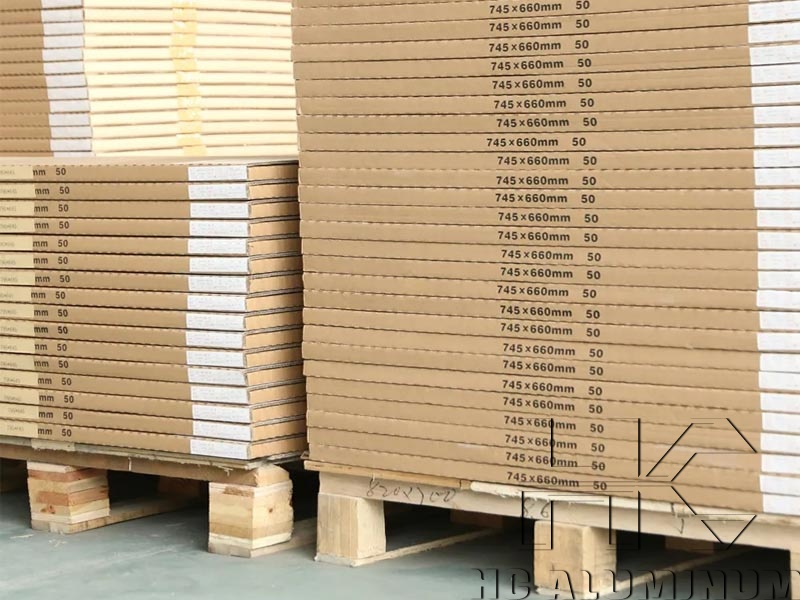
Storage stability: Plates may travel long distances by sea or land before use. Packaging, moisture control, and coating stability are therefore critical for export customers. A good plate should arrive flat, clean, and ready for predictable exposure.
Violet plates versus thermal plates
Thermal and violet technologies each have their place. Thermal plates, generally exposed around 830 nm, are known for strong process stability and broad commercial use. Violet plates are valued for speed, sensitivity, and efficiency, particularly in high-volume plate output. A printer already running a thermal CTP line may prefer Thermal Plates for certain commercial jobs, while a plant with fast edition cycles may find violet plates more suitable.
A practical example: a regional newspaper printer producing 600 plates per night cares deeply about exposure speed, processor reliability, and plate cost per square meter. Violet plates can be an excellent fit. A high-end packaging printer running very long jobs with aggressive UV inks may compare thermal, baked, or specialty plate options more closely. The best plate is not the one with the most impressive brochure claim; it is the one that reduces risk in the customer's actual workflow.
Handling and processing recommendations
Violet printing plates should be handled under recommended safelight conditions, typically yellow or amber lighting depending on the plate type and manufacturer's instruction. White light exposure should be avoided before imaging and processing. Operators should keep plates sealed until use and store them in a cool, dry place away from direct sunlight, chemical vapors, and condensation.
Processor control is equally important. Developer temperature, brushing pressure, replenishment, and wash quality should be checked regularly. If the developer is exhausted, even a high-quality plate will show symptoms such as dirty background, weak image areas, or unstable dot reproduction. In my experience, many plate complaints begin not from the plate itself, but from a processor that has slowly drifted out of control.
For best results, run a standard control strip during qualification. Record exposure energy, processor speed, developer temperature, dot values, and press performance. These records make future troubleshooting much faster and help both supplier and printer speak the same technical language.
Where violet printing plates perform especially well
Violet plates are widely used in newspaper and publication printing because they support fast plate output and dependable reproduction. They are also suitable for many commercial offset jobs such as flyers, manuals, books, forms, inserts, and educational materials. Where the production target is stable quality at controlled cost, violet CTP remains highly relevant.
Consider a book printer producing black text pages with occasional grayscale images. The key requirements are sharp type, low remake rate, and stable plate behavior over repeated jobs. Violet photopolymer plates can deliver exactly that. In another case, a newspaper printer running multiple editions may benefit from the short exposure time and efficient plate throughput, keeping the press schedule on track even when editorial changes arrive late.
How to select a violet printing plate supplier
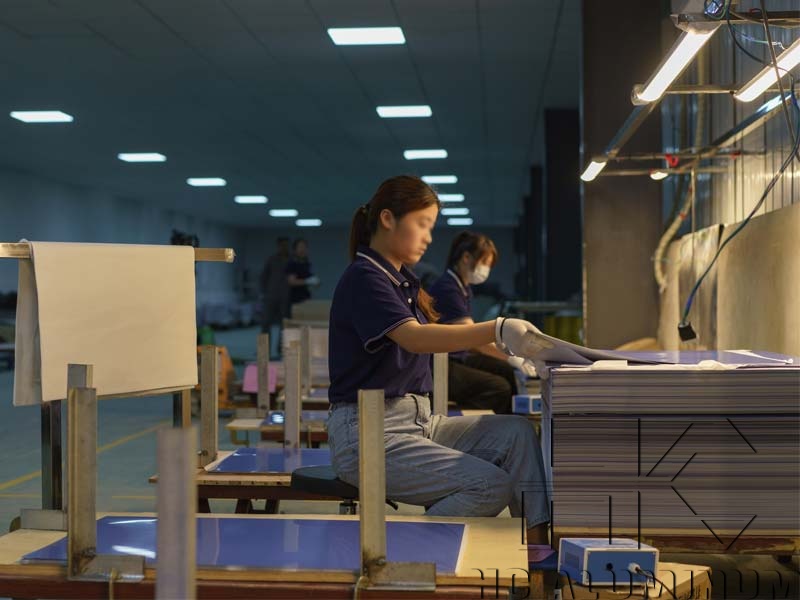
A reliable supplier should control both the aluminum substrate and the coating process. The aluminum base needs uniform thickness, proper electrochemical graining, strong anodizing, and a clean hydrophilic surface. The coating must be even across the full plate width, with stable sensitivity from batch to batch.
Buyers should ask for technical data, trial guidance, packing details, shelf-life information, and recommended processing parameters. For export orders, packaging deserves special attention. Moisture-resistant wrapping, strong cartons, clear labeling, and pallet protection help plates survive international transportation.
Violet printing plates are a mature technology, but mature does not mean simple. The difference between an average plate and a dependable plate is seen in daily production: fewer remakes, cleaner backgrounds, faster setup, and more confidence from the pressroom. For printers seeking speed, economy, and stable offset performance, violet CTP plates remain a highly practical solution.
PRODUCTS
ONLINE CONSULTATION
If you have any questions, please contact us and we will contact you as soon as possible.


Leave A Message
If you are interested in our products and want to know more details, please leave a message here, we will reply you as soon as we can.