
News
For printers who run high-volume newspapers, books, manuals, forms, packaging inserts, or commercial jobs with tight delivery windows, the Violet Photopolymer CTP Plate remains a very practical and technically mature solution. It is not simply a plate that works with a violet laser; it is a plate system designed around fast photopolymer reaction, stable dot reproduction, and efficient plate room operation.
A violet photopolymer plate is normally imaged by a 405 nm violet laser diode. During exposure, the laser hardens the image area through photopolymerization. After processing, the non-image area is removed, leaving a durable oleophilic image that accepts ink and a hydrophilic aluminum background that accepts fountain solution. This negative-working mechanism gives violet plates their recognized strengths: fast exposure, sharp dots, good press latitude, and attractive total operating cost.
Why 405 nm Violet Imaging Still Matters
The 405 nm violet laser has a strong advantage in energy efficiency. Compared with many older exposure systems, violet laser diodes can image quickly with relatively low power consumption. For a busy prepress department, that difference is not theoretical. It can mean shorter plate output time, smoother shift planning, and less waiting between file approval and press mounting.
In practical production, the value of a violet photopolymer plate is most visible when the same plate setter must handle many plates per hour. Newspaper plants, educational publishers, and trade printers often choose violet systems because the plate making workflow is fast and repeatable. When the imaging unit, processor, developer condition, and plate storage are controlled, the plate can deliver consistent 1% to 99% dot reproduction, depending on screening, processor status, and plate specification.
Violet technology also fits well into plants that already use a standardized CTP Printing Plate workflow. The operator does not need to change the entire production philosophy. The essential focus is matching the correct violet-sensitive plate with the platesetter, processor, chemistry, and press conditions.
Technical Structure of a Violet Photopolymer CTP Plate
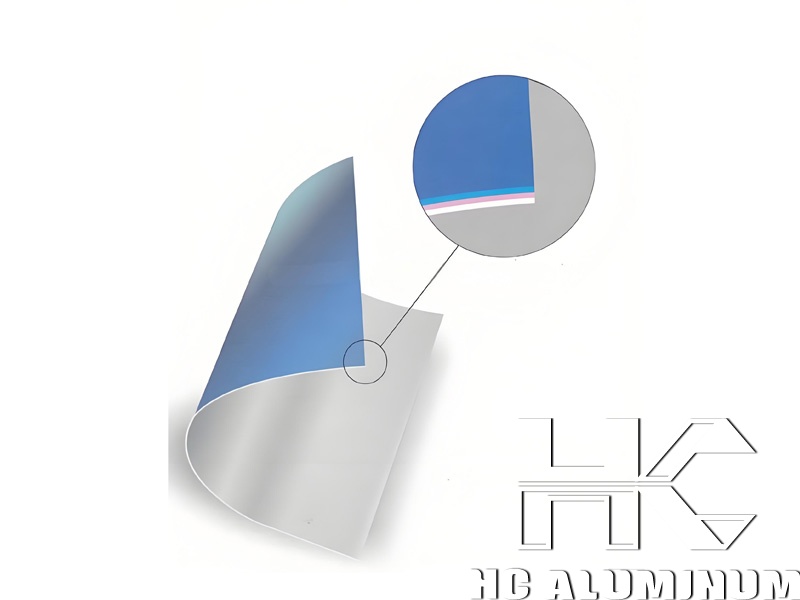
A reliable violet photopolymer plate begins with a high-quality aluminum base. The surface is electrochemically grained and anodized to create a micro-rough structure that supports water retention, coating adhesion, and long press life. The photopolymer coating is then applied with strict thickness and sensitivity control.
A typical plate structure includes:
Aluminum substrate: Provides dimensional stability and mechanical strength.
Grained and anodized surface: Improves hydrophilicity and coating anchorage.
Photopolymer layer: Reacts to 405 nm violet laser exposure and forms the printable image.
Protective overcoat, when applicable: Helps reduce oxygen inhibition and improves imaging stability.
The coating must be sensitive enough for high-speed imaging but stable enough for storage, transportation, and plate handling. This balance is one of the real measures of plate quality. A plate that images quickly but scratches easily, scums on press, or loses fine dots during processing will not save money in actual production.
Main Advantages for Commercial and Newspaper Printers
The first advantage is productivity. Violet photopolymer plates are suitable for fast imaging, especially where multiple editions or frequent job changes are common. A newspaper plant, for example, may need to output plates for several sections within a narrow time window. A stable violet plate helps reduce bottlenecks before press start.
The second advantage is image sharpness. The photopolymer reaction produces clean image edges, which is important for small text, reverse type, fine lines, and screen work. In book printing, this can improve the readability of fine characters. In commercial leaflets, it can support smoother gradients and cleaner brand colors.
The third advantage is cost control. Violet platesetters often use durable laser diodes and efficient exposure systems. When combined with stable plate chemistry and disciplined processor maintenance, the cost per acceptable plate can be highly competitive.
Where Violet Photopolymer Plates Perform Best
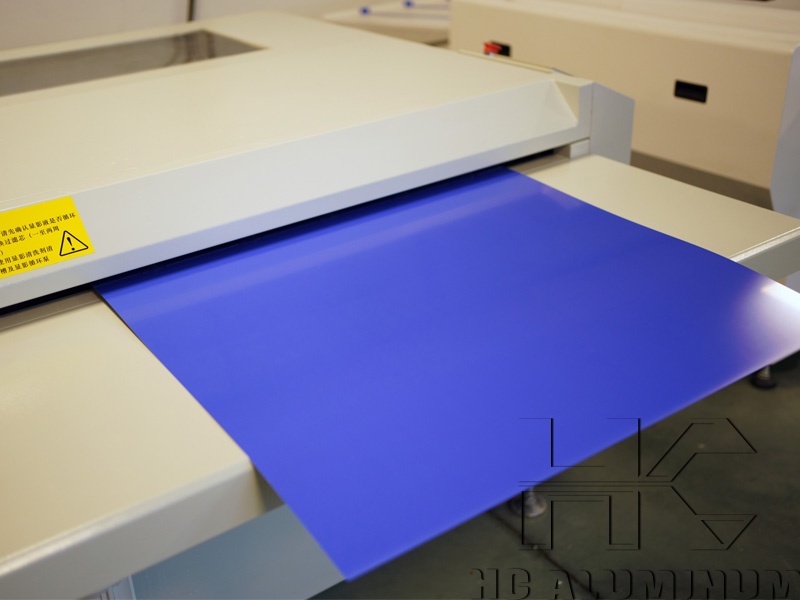
Violet photopolymer plates are commonly used for:
Newspaper and publication printing
Book and magazine production
Commercial offset printing
User manuals and instruction sheets
Business forms and educational materials
Medium to long-run sheetfed and web offset work
For example, a book printer producing black-and-white textbooks may value stable text reproduction more than extreme highlight detail. A violet photopolymer plate gives fast output, consistent line clarity, and dependable press behavior. A newspaper printer, on the other hand, needs speed, stable solids, and predictable dot gain across repeated editions. Violet plates are well suited to that environment when the plate room conditions are controlled.
Because most violet photopolymer plates are negative-working, buyers often compare them with a Negative CTP Plate used in other laser systems. The key difference is not only image polarity, but also laser wavelength, coating chemistry, and processing requirements.
Handling and Processing Points That Affect Plate Quality
A violet photopolymer CTP plate should be handled under appropriate safelight conditions specified by the plate manufacturer. Unlike many thermal plates that can tolerate ordinary daylight for a limited time, violet-sensitive plates require more controlled handling. This is not a weakness; it is part of the chemistry. With proper plate room discipline, handling is straightforward.
Several factors have a direct influence on production stability:
Developer activity: Weak or contaminated developer can cause poor clean-out, background toning, or dot loss.
Processor temperature: Temperature variation changes development speed and image durability.
Replenishment rate: Under-replenishment may reduce consistency during long shifts.
Brush pressure and transport speed: Incorrect settings can damage fine dots or leave residue.
Storage environment: Plates should be stored away from heat, moisture, and direct light.
A practical example: if a pressroom reports scumming after 5,000 impressions, the plate itself may not be the only cause. The investigation should include processor conductivity, developer age, gum condition, fountain solution pH, ink-water balance, and blanket contamination. Good plate performance is a system result.
Comparison with Thermal CTP Plates
Thermal CTP plates are widely used and valued for daylight handling and strong process latitude. Violet photopolymer plates, however, often provide faster imaging speed and lower laser energy demand. For printers who already own violet platesetters, a high-quality violet plate can be more economical than changing equipment.
The right choice depends on the production target. A packaging printer requiring very long runs, aggressive inks, or special post-baking performance may evaluate thermal options. A newspaper or publication printer focused on speed, fine text, and daily plate volume may find violet photopolymer plates highly efficient.
What Buyers Should Check Before Ordering
Before purchasing Violet Photopolymer CTP Plates, technical matching is essential. Buyers should confirm:
Compatible platesetter brand and model
Laser wavelength, normally 405 nm
Required exposure energy range
Plate thickness, such as 0.15 mm, 0.20 mm, 0.24 mm, or 0.30 mm
Plate size and punching requirements
Developer type and processing conditions
Expected run length with or without baking
Packaging method for export transportation
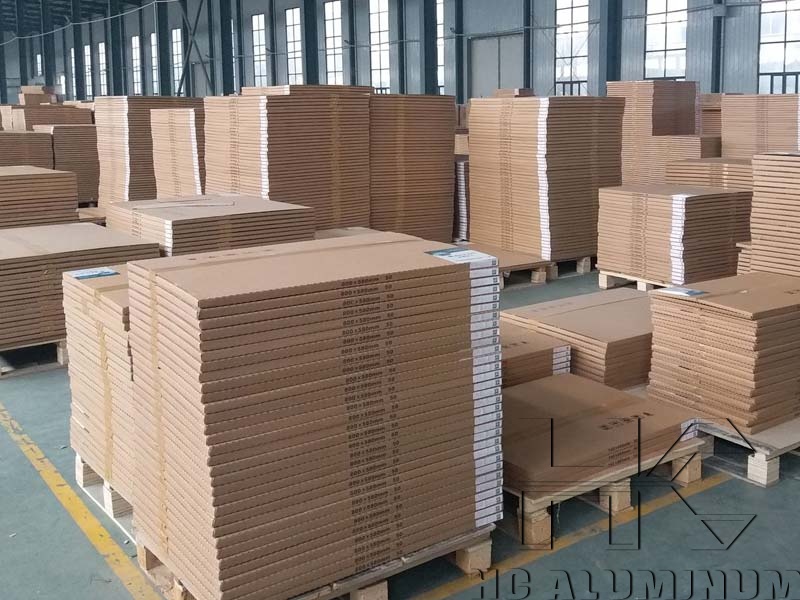
For export orders, packaging should protect the coating and prevent edge damage. Moisture-proof wrapping, firm carton structure, pallet protection, and clear batch identification all matter. A plate may be technically excellent, but if it arrives with rubbed coating, bent corners, or unstable storage history, the printer pays the price in waste.
A Professional View on Plate Selection
From a manufacturing and supply perspective, the best violet photopolymer plate is not the one with the most attractive specification sheet. It is the one that behaves predictably in the customer's real workflow. A plate must image cleanly, process easily, mount accurately, start up quickly, and maintain ink-water balance during the run.
For potential clients evaluating suppliers, I recommend testing with actual jobs rather than only test patterns. Include fine text, flat tints, heavy solids, screens, and the paper grades used in daily production. Record exposure settings, processor conditions, plate output time, startup waste, and impression stability. This approach gives a much clearer picture of long-term value.
A well-produced Violet Photopolymer CTP Plate can help printers improve prepress speed, reduce remakes, stabilize press startup, and maintain high-quality offset reproduction. For plants that value fast plate output and dependable image consistency, it remains a strong and commercially sensible choice.
PRODUCTS
ONLINE CONSULTATION
If you have any questions, please contact us and we will contact you as soon as possible.


Leave A Message
If you are interested in our products and want to know more details, please leave a message here, we will reply you as soon as we can.