
News
Metal printing plates remain essential to professional offset printing because they combine image precision, press stability, and dependable run length. Although digital printing has expanded rapidly, aluminum-based plates continue to be the preferred imaging carrier for books, packaging, labels, newspapers, commercial brochures, and many other high-volume applications.
From my perspective as a plate manufacturer and exporter, the best way to evaluate a metal printing plate is not by its appearance alone. A plate must be judged by what happens throughout the complete workflow: imaging, processing or on-press development, mounting, ink-water balance, dot reproduction, abrasion resistance, and storage after production. A plate that images cleanly but causes scumming, premature wear, or unstable color density on press is not a cost-effective plate.
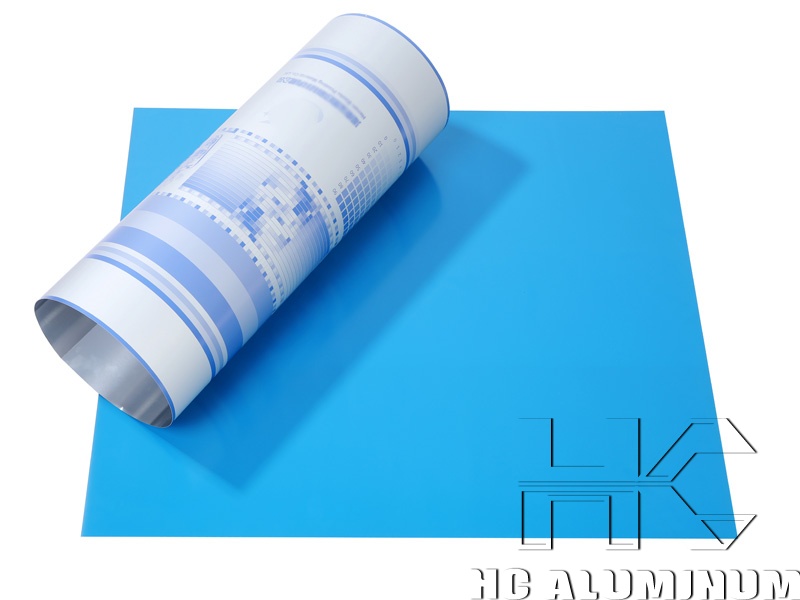
What Are Metal Printing Plates?
Metal printing plates are thin, precision-treated sheets used to transfer an image to a printing substrate in offset lithography. Most modern plates are produced from high-quality aluminum because aluminum offers an effective balance of flatness, dimensional stability, corrosion resistance, lightweight handling, and economical recycling value.
The working principle is based on the separation of image and non-image areas. The image area is ink-receptive, while the non-image area remains hydrophilic and attracts fountain solution. During printing, the plate transfers the inked image to a rubber blanket, which then transfers it onto paper, board, film, or another printable material.
A typical aluminum plate structure includes:
An aluminum alloy substrate with controlled thickness and flatness
An electrochemically grained surface that supports water retention
An anodized layer that improves durability and corrosion resistance
A hydrophilic treatment for stable non-image performance
A photosensitive or thermally sensitive coating for image creation
These layers work as one system. Even a small variation in graining uniformity, anodic oxide weight, coating quality, or plate gauge can influence ink-water balance and image consistency.
Main Types of Aluminum Printing Plates
Different printing environments require different plate technologies. Choosing correctly depends on the press type, imaging equipment, run length, processing conditions, and quality requirements.
PS Plates
Presensitized, or PS, plates are conventionally exposed through a film positive or negative and then developed. They remain practical for printers using analog plate-making systems and for markets where film workflows are still common.
Presensitized Plate products are valued for their straightforward processing, strong image visibility, and broad compatibility with conventional offset presses. Positive PS plates are widely used for commercial sheet-fed printing, while negative plates can suit specific exposure and production conditions.
CTCP Plates
Computer-to-Conventional Plate, or CTCP, technology images plates directly from digital files using UV laser exposure. CTCP eliminates film output, reduces registration error, and shortens prepress preparation compared with traditional PS workflows. It is a practical transition technology for printers seeking digital plate imaging without moving immediately to thermal CTP.
Thermal CTP Plates
Thermal CTP plates are imaged with thermal laser systems, commonly at 830 nm. Their high imaging precision makes them suitable for demanding commercial work, packaging, fine-screen reproduction, and long-run applications. Thermal imaging generally provides excellent repeatability because the coating responds to heat rather than ambient light conditions.
For printers that need dependable dot control and stable press performance, an Offset Printing Plate selected for the correct thermal workflow can significantly reduce remake rates and press adjustment time.
Process-Free Plates
Process-free plates are designed to avoid conventional chemical development. The imaged coating is removed or conditioned during the initial press run, reducing processor maintenance, chemical consumption, water use, and wastewater handling. They are increasingly attractive to printers focused on cleaner production and simpler prepress operations.
However, process-free plates should be matched carefully to the press condition. Fountain solution chemistry, blanket condition, ink type, roller settings, and operator practice all affect successful on-press development.
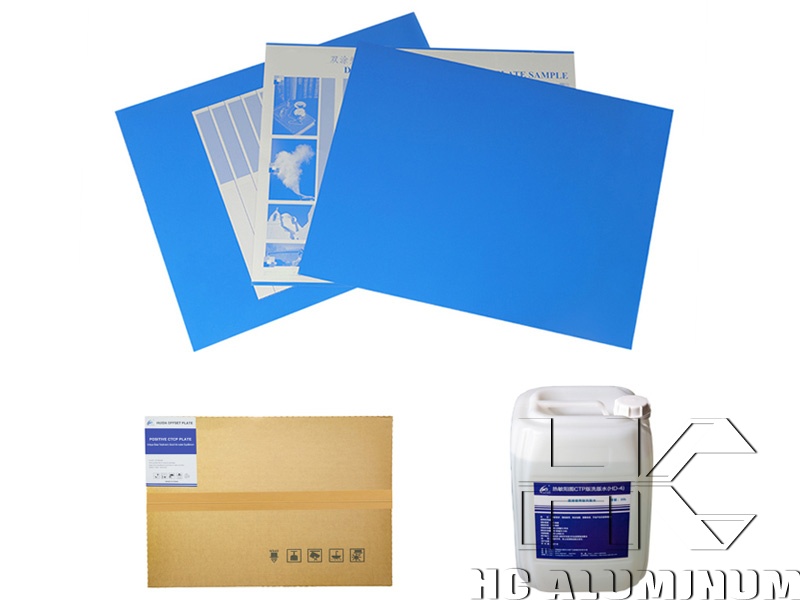
Technical Factors That Influence Printing Results
When clients ask why two aluminum plates with similar specifications can perform differently, the answer is usually found in surface engineering and production control.
Surface grain structure affects water retention. A properly grained surface supports a stable fountain solution film, helping prevent toning and scumming in non-image areas.
Anodizing quality affects plate durability. A uniform anodic layer improves resistance to mechanical wear, chemical attack, and oxidation during storage. This is particularly important for long-run printing and UV ink applications.
Coating sensitivity determines imaging efficiency. A plate with suitable sensitivity can shorten exposure time and support productive plate output. Excessive sensitivity, however, is not automatically better; it must be balanced with safe-light tolerance, image robustness, and clean development.
Resolution and dot fidelity matter for high-value work. For example, a cosmetic carton with small reversed text, smooth gradients, and 1-2% highlight dots requires a plate that holds fine details without filling in shadows or losing highlight information.
Run length should be considered realistically. A local brochure printer running 10,000 impressions may prioritize fast imaging and economical plate cost. A packaging converter producing 150,000 copies with abrasive coated board may require stronger anodizing and a more durable coating system.
Practical Plate Selection Examples
A newspaper printer normally values fast throughput, reliable solids, and consistent reproduction on high-speed web presses. Plates for this application should image efficiently, mount accurately, and maintain non-image cleanliness under demanding production schedules.
A commercial printer producing annual reports, art books, and premium catalogs often prioritizes fine-screen capability, repeatable color, and sharp text. Thermal positive plates are frequently suitable because they support stable imaging and precise tonal reproduction.
A packaging printer using UV inks must evaluate plate resistance carefully. UV ink systems, aggressive wash-up solutions, and long production runs can place greater stress on the plate surface. A plate specification that works well with conventional ink may not deliver the same life with UV ink.
Storage, Handling, and Process Control
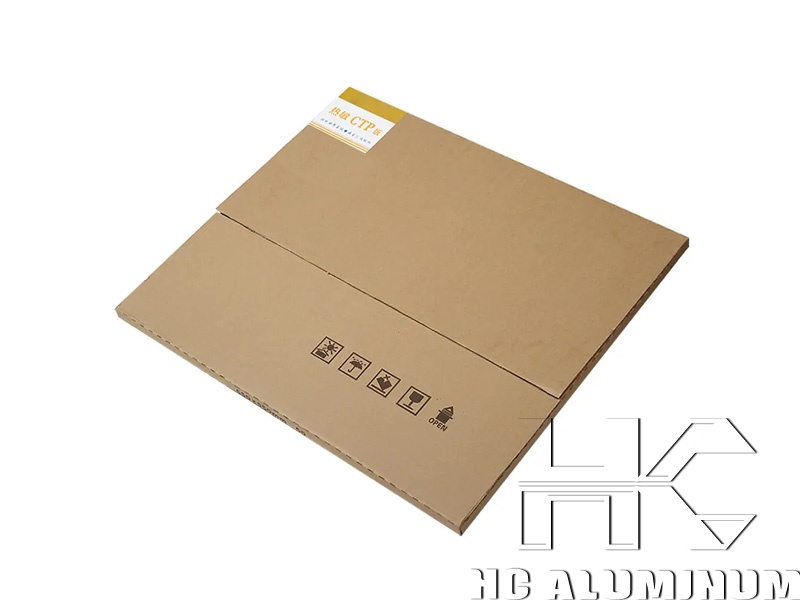
Plate quality can be lost before the plate reaches the press if storage and handling are neglected. Aluminum plates should be kept in a dry, clean environment away from direct sunlight, excessive heat, and chemical vapors. Plates should remain in their original protective packaging until use, and operators should avoid touching the coated surface with bare hands.
Correct plate processing is equally important. Developers, gums, replenishment rates, temperature, conductivity, and processor roller condition should be monitored regularly for processed plate workflows. For CTP systems, laser calibration and focus must be maintained to ensure stable imaging across the full plate width.
Choosing a Metal Printing Plate Supplier
A reliable supplier should provide more than standard plate dimensions. Look for consistent aluminum coil quality, controlled manufacturing processes, clear technical data, stable batch-to-batch performance, suitable packing for export transport, and responsive technical support.
The strongest plate solution is one that fits the printer's full production environment. Matching the plate to the imaging device, press configuration, ink system, run length, and environmental objective helps reduce waste while protecting print quality. Metal printing plates are not simply consumables; they are precision components that directly influence every printed sheet.
PRODUCTS
ONLINE CONSULTATION
If you have any questions, please contact us and we will contact you as soon as possible.


Leave A Message
If you are interested in our products and want to know more details, please leave a message here, we will reply you as soon as we can.