
News
Buying CTCP plates from China is often perceived as "cheap plates, fast delivery." The reality is more nuanced: CTCP plate price in China is highly spec-driven, and two quotes that look similar on paper can produce very different outcomes on press.
This article breaks down what forms the CTCP plate cost, what you should provide in an RFQ to get a truthful quote, and how to compare suppliers in a way that protects print performance and total cost of ownership.
1) What a "CTCP plate price" actually includes
In China, CTCP plates are typically quoted as price per square meter (USD/m²) or as a converted price per sheet based on your standard sheet sizes (e.g., 1030 × 800 mm). The most useful pricing view is always USD/m², because it normalizes different sizes and avoids hidden math.
A robust quote should clearly separate:
Plate base + coating price (the core value)
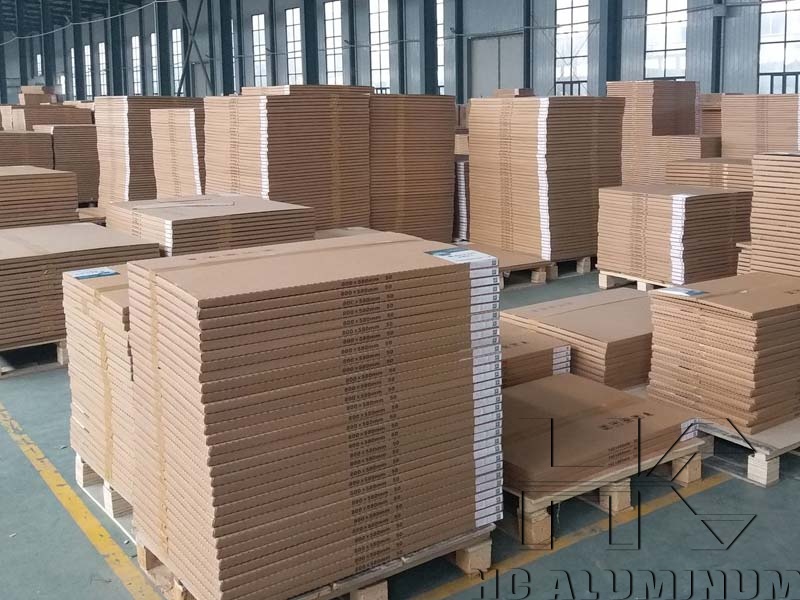
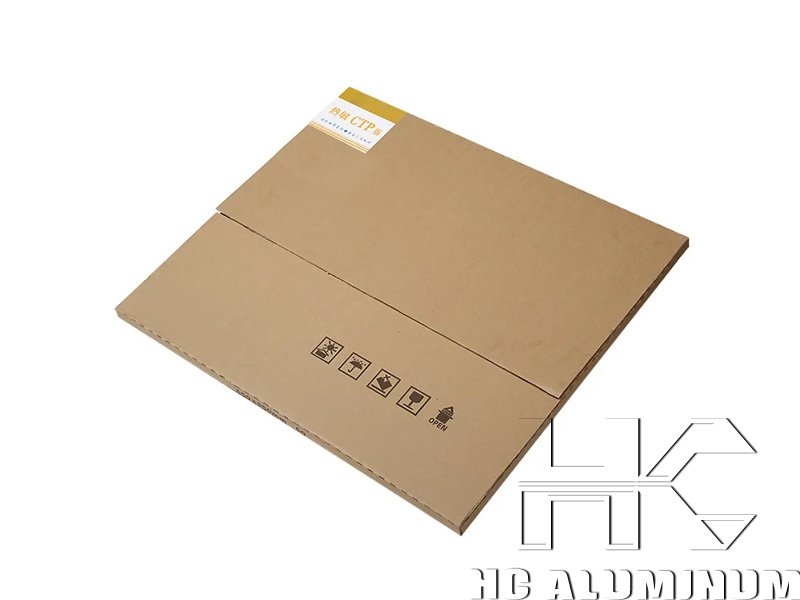
Packaging and palletization (export-worthy packing adds cost but reduces damage and claims)
Freight terms (EXW, FOB, CFR/CIF, DDP) and whether inland China trucking is included
Quality tolerance and claim policy (this is not "nice to have," it is part of price)
When a supplier gives a "very low" CTCP plate price in China without clarifying coating type, plate construction, warranty terms, or packaging grade, you are often looking at a quote optimized for the spreadsheet rather than for stable printing.
2) The main cost drivers behind CTCP plate price in China
(a) Plate construction: single layer vs double layer
CTCP plates in the market generally fall into single layer and double layer structures. The coating architecture affects sensitivity window, development latitude, dot reproduction, and run length stability.
A double-layer structure typically costs more, not because it is "marketing," but because it uses more complex coating chemistry and tighter production control.
(b) Aluminum substrate: grain, anodizing, and cleanliness
The aluminum base is not a commodity detail. In pricing terms, the substrate influences yield and press stability:
Electrochemical graining affects water balance and ink acceptance behavior
Anodizing weight and uniformity affect abrasion resistance and run length
Surface cleanliness affects coating adhesion and reduces pinholes or micro-defects
A cheaper base can reduce upfront CTCP plate cost while increasing waste, scumming risk, and plate-to-plate variability.
(c) Coating chemistry and "true" CTCP window
CTCP (often associated with UV-CTP / 405 nm violet imaging systems) is sensitive to a defined wavelength range and energy. If the plate is positioned as "universal" but the coating is tuned loosely, you may see:
Higher imaging energy requirements (longer imaging time)
Reduced tolerance to environmental conditions
Narrower development latitude (more sensitivity to developer strength, temperature, and replenishment)
(d) Performance specs that directly change price
Suppliers often price based on your requirement for:
Run length target (commercial vs higher durability)
FM/AM screening capability (e.g., 1–99% dot reproduction expectations)
Anti-scratch and handling robustness (important for long logistics chains)
Shelf life and storage tolerance
When you tighten any of these parameters, the CTCP plate price in China logically moves up.
3) How to request a quote that is actually comparable
If you want meaningful comparisons, provide these points in your RFQ:
Imaging system: violet 405 nm model, drum/flatbed, and your normal energy setting
Plate thickness: 0.15 / 0.20 / 0.25 / 0.30 / 0.40 mm
Plate size and monthly volume: list top 3 sizes and total m²/month
Developer brand and process: temperature, replenishment, target conductivity (if controlled)
Press type and typical run length: web/offset, ink set, fountain solution style
Screen ruling / dot spec: especially if you run stochastic or fine AM screens
Packaging requirement: export carton + moisture barrier + pallet standard
You will notice that once you specify these, "cheap" and "expensive" quotes start to make sense technically.
4) Illustrative pricing examples (how specs change the number)
Because CTCP plate price in China fluctuates with aluminum markets, coating inputs, and order structure, it is more accurate to think in pricing bands and deltas rather than a single fixed number.
Example A: Standard commercial sheetfed application
0.30 mm
Common sizes (e.g., 1030 × 800 mm)
Normal AM screening, moderate run length
Standard export packing
In this scenario, suppliers tend to compete aggressively. The main price differences usually come from substrate grade and coating consistency. If two offers differ by a small amount per m² but one supplier provides tighter dot reproduction and fewer defects, the "higher" quote can still be cheaper after waste and downtime are counted.
Example B: Higher-demand reproduction / tighter processing latitude
Fine screens or mixed job types
More variation in developer conditions
Higher expectations for highlight/shadow stability
Here, you may see a meaningful premium because the manufacturer must control coating thickness, sensitivity window, and base quality more tightly. A plate that tolerates real-world variation reduces re-imaging, remakes, and press-side corrections.
Example C: Export buyer optimizing landed cost
If you buy on FOB and manage freight, you may reduce landed cost versus CIF/DDP. But if your supply chain has frequent trans-shipments, stronger packaging and moisture control may be the smarter spend.
5) How to evaluate a "low price" without taking hidden risk
When you compare CTCP plate price in China, use a few practical checkpoints:
Ask for a same-batch sample (not a "special sample") and run it under your real imaging energy and developer conditions.
Request QC metrics: substrate thickness tolerance, coating weight control method, defect inspection standard.
Confirm claim handling: what constitutes a valid defect claim, and the replacement or credit mechanism.
Check packaging details: desiccant, moisture barrier, corner protection, pallet stability.
If a supplier is unwilling to disclose process-relevant basics, the low price is often achieved by cutting controls you will end up paying for later.
6) Product selection that impacts price and print economics
When discussing CTCP products, it helps to anchor the conversation around real press behavior rather than only per-sheet cost.
If your shop values stable commercial performance and predictable processing, start by evaluating CTCP Plates across your main job types and imaging conditions.
If you are comparing suppliers for consistent imaging response and dot fidelity under violet CTP, it is more precise to specify CTCP Printing Plates requirements in your RFQ (plate structure, thickness, development latitude, and run length).
Those two phrases may sound similar, but in quotation practice they lead to different technical clarifications, which is exactly what makes the final price "real" rather than theoretical.
7) My practical buying advice for negotiating CTCP plate price in China
If I were advising a print buyer or distributor on negotiating today, I would focus on three levers:
Normalize everything to USD/m² and lock specs. Many disputes come from unclear thickness, packaging, or plate construction.
Negotiate on annual volume with scheduled releases. Chinese manufacturers can offer better pricing when production planning is predictable.
Treat consistency as a cost reduction tool. A plate that reduces remake rate by even a small percentage often pays back more than the per-m² savings of a lower-grade option.
If you share your CTP model, plate thickness, monthly m², and your typical developer/process window, a supplier should be able to give you a targeted quote and recommend the most economical configuration for your application rather than a generic "lowest price" offer.
PRODUCTS
ONLINE CONSULTATION
If you have any questions, please contact us and we will contact you as soon as possible.


Leave A Message
If you are interested in our products and want to know more details, please leave a message here, we will reply you as soon as we can.