
News
A conventional CTP plate is the workhorse of modern offset prepress: it is imaged directly from your RIP to the plate on a CTP engine, then processed through a plate processor to create a durable image area and a clean non-image area. Many printers have evaluated process-free options, yet conventional CTP plates remain the most predictable choice when the priority is repeatability, wide press compatibility, and stable long-run performance across varying pressrooms.
Conventional does not mean outdated. It means the plate is designed around a controlled, proven workflow: imaging → chemical processing → gumming → drying → press. When that sequence is well-managed, the plate delivers extremely consistent dot reproduction, dependable start-up behavior, and a forgiving operating window for busy commercial and packaging environments.
1) Structure and working principle (in practical terms)
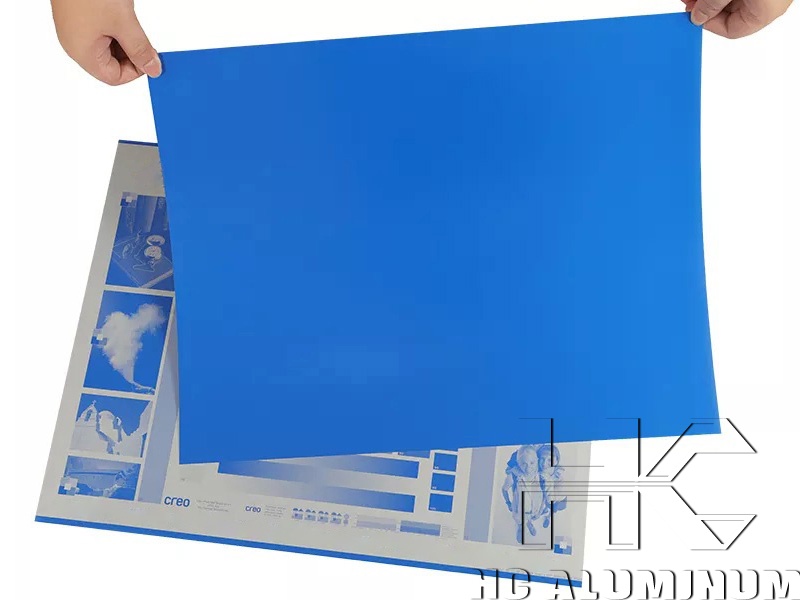
Most conventional CTP plates are aluminum-based lithographic plates with a carefully engineered surface and a photosensitive coating:
Electrochemically grained and anodized aluminum: creates the micro-roughness and oxide layer needed for water retention and mechanical anchoring.
Photosensitive layer: reacts to laser energy from the CTP device. Depending on plate type, the reaction changes solubility in the developer.
Protective overcoat (on some models): improves handling and reduces sensitivity to fingerprints, humidity, or transport abrasion.
After imaging, the plate goes through a developer that removes either exposed or unexposed coating (positive vs. negative working). The remaining image area becomes ink-receptive, while the background holds water and resists ink.
Positive vs. negative conventional CTP plates
Positive-working plates: the exposed area becomes more soluble and is removed by developer.
Negative-working plates: the exposed area hardens (polymerizes) and remains after development.
In selection meetings, I often translate that chemistry into operational language: positive plates are typically chosen for their clean highlight handling and familiarity in many commercial shops; negative plates are often favored for robustness and long-run stability, particularly under demanding press conditions.
2) Imaging technologies: thermal and violet
Conventional CTP plates are commonly available for thermal (830 nm) and violet (405 nm) imaging.
Thermal conventional CTP plates tend to be very stable against ambient light, making them easier to handle in mixed-light prepress rooms. They usually provide strong dot stability and are widely used when consistency is more important than marginal speed gains.
Violet conventional CTP plates can offer high imaging speed and good quality when the prepress environment is controlled (light management matters more). For print businesses focused on throughput, violet remains a competitive option.
A useful example: a commercial printer running frequent job changes (flyers, brochures, catalogs) typically benefits from thermal plate stability because it reduces "mystery variation" between day and night shifts. A publication printer with tightly controlled prepress conditions may favor violet for speed.
3) Processing workflow: where conventional plates earn their reputation
The "conventional" workflow is the reason many plants trust these plates:
Imaging on the CTP engine (correct laser power and focus are critical).
Developing (developer activity, temperature, and dwell time determine clean-out and dot integrity).
Rinsing and gumming (stabilizes background, improves storage behavior).
Drying and quality check (spot-check solid density potential, clean background, and resolution).
Because each step is measurable, you can standardize the process using simple controls:
Maintain developer conductivity/pH within supplier specs.
Keep temperature stable (small fluctuations can shift dot gain).
Replace filters and refresh chemistry on schedule.
Use control strips and a densitometer/plate reader when available.
This is where conventional plates often outperform "simpler" alternatives in real life: when you are running multiple presses, different operators, and mixed job types, a well-managed conventional line creates a predictable baseline.
4) Press performance: what your operators will notice
A well-matched conventional CTP plate typically delivers:
Fast and stable ink-water balance: less time wasted "chasing" the balance on makeready.
Clean background: reduced scumming risk when fountain solution is properly set.
Strong dot fidelity: especially in 2–98% tonal range when plate curve and processing are controlled.
Reliable run length: appropriate for commercial and many packaging runs (actual run length depends on plate type, ink system, paper, fountain solution, and press condition).
Illustrative example: a folding carton printer running 175 lpi screens and heavy coverage solid areas often needs a plate that resists abrasion and maintains dots through the run. In that situation, a robust conventional plate plus disciplined chemistry control usually pays back through fewer plate remakes and less downtime.
5) How to specify the right conventional CTP plate (a buyer's checklist)
When clients ask me what information matters most for selecting a conventional CTP plate, I focus on the parameters that directly affect production stability:
CTP laser type and wavelength (thermal 830 nm or violet 405 nm)
Plate type (positive/negative working)
Thickness (matched to cylinder undercut and press standard)
Grain/anodizing quality (impacts water retention and durability)
Resolution and screening (AM/FM/hybrid compatibility)
Developer compatibility (your existing chemistry or a recommended matched set)
Storage and handling conditions (temperature, humidity, shelf life)
If your operation also runs computer-to-conventional workflows, it is worth understanding adjacent technologies like CTCP Plates for UV exposure environments, or specialized configurations such as Double Layer CTCP Plate where durability demands are high. Even if you stay with conventional CTP for most work, knowing these options helps when a specific job pushes the limits.
6) Common troubleshooting (and what usually fixes it)
Problem: background toning/scumming
Likely causes: exhausted developer, contamination, incorrect rinse/gum, fountain solution imbalance.
Typical fix: restore developer activity, verify processor settings, check water quality and fountain mix.
Problem: weak highlights or plugged shadows
Likely causes: imaging energy mismatch, processing dwell/temperature drift, calibration curve issues.
Typical fix: recalibrate laser power, stabilize processor temperature, recheck RIP curve and plate linearization.
Problem: short run length / premature wear
Likely causes: abrasive stock, aggressive wash-ups, incorrect plate bake procedure (if used), press condition.
Typical fix: verify plate selection for the job, optimize press chemistry, confirm correct handling and storage.
7) Why many plants still standardize on conventional CTP plates
When I evaluate plate programs with print managers, the decision often comes down to operational risk. Conventional CTP plates provide a wide safety margin: they tolerate real-world variation better than most people expect, and they respond well to disciplined process control.
If you want a plate program that is easy to standardize across shifts, resilient across job types, and predictable on press, a conventional CTP plate remains one of the most practical choices in offset printing today.
PRODUCTS
ONLINE CONSULTATION
If you have any questions, please contact us and we will contact you as soon as possible.


Leave A Message
If you are interested in our products and want to know more details, please leave a message here, we will reply you as soon as we can.