
News
For many commercial printers, the appeal of a China CTCP plate is not simply lower sourcing cost. The real value lies in achieving stable imaging, predictable press life, and dependable supply at a quality level that supports serious production work. Over the past several years, Chinese CTCP plate manufacturing has matured significantly. The best producers now combine tightly controlled aluminum graining, advanced anodizing, precise coating technology, and disciplined quality inspection to deliver plates that perform consistently on mainstream CTCP systems.
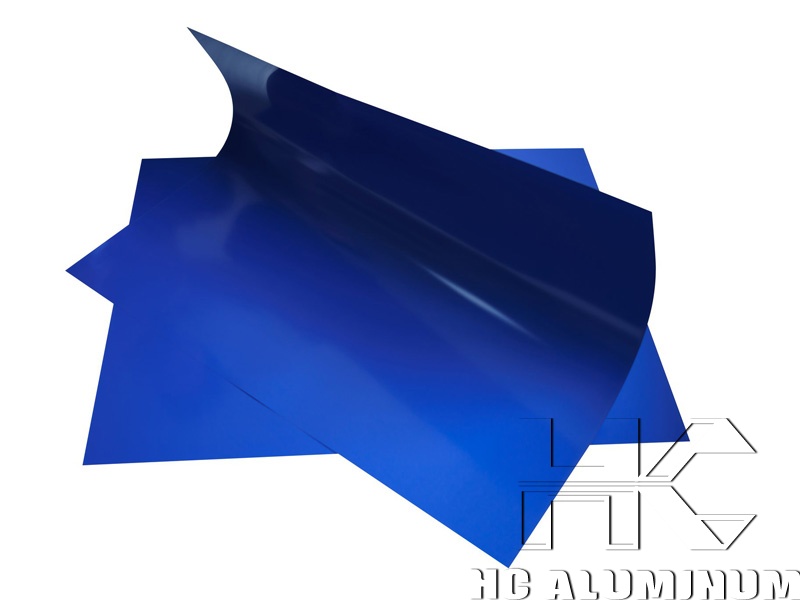
CTCP, or Computer-to-Conventional-Plate, occupies a practical position between traditional PS plate workflows and fully process-free thermal technologies. It allows printers to continue using established processing equipment while benefiting from digital plate imaging. For print shops focused on commercial sheets, books, inserts, manuals, packaging components, and newspaper-related work, CTCP remains a highly rational solution because it balances plate cost, output quality, and operational familiarity.
A typical China CTCP plate is designed as a positive-working plate for visible light exposure, commonly around the 400-430 nm range, making it suitable for many CTCP setters equipped with violet or compatible laser sources. Structurally, the plate begins with high-grade aluminum substrate. That substrate is mechanically and electrochemically grained to create a uniform microstructure, then anodized to improve hydrophilicity and corrosion resistance. On top of this base, the photosensitive coating determines how efficiently the plate images, develops, accepts fountain solution, and resists wear on press.
This is where plate quality becomes immediately visible in production. A well-made CTCP plate should offer fast imaging sensitivity, clean dot reproduction from highlight to shadow, strong ink-water balance, and low background toning. It should also tolerate reasonable variations in processor chemistry and room conditions without becoming unstable. Printers often underestimate how much downtime comes from marginal plates: slow roll-up, scumming, premature wear, or inconsistent development can consume more money than the plate price difference itself.
In my view, potential buyers should judge a China CTCP plate by five technical criteria.
1. Imaging Latitude and Dot Reproduction
The first priority is imaging stability. A plate must hold fine dots, maintain edge sharpness, and reproduce tonal transitions smoothly. For example, in a catalog job with skin tones, gradient backgrounds, and small reversed text, weak coating uniformity will usually show up as rough transitions or unstable highlight dots. A reliable CTCP plate should support accurate reproduction of 1%-99% tonal values under controlled conditions, although actual output also depends on the imagesetter, RIP curve, processor, and press calibration.
2. Development Tolerance
A good CTCP plate should not behave like a laboratory material that only works under ideal settings. In real printing plants, developer conductivity shifts, replenishment rates vary, and ambient temperatures rise during peak production. Strong development latitude helps the pressroom maintain consistency across shifts. This is one reason many buyers compare standard CTCP Plates not only by price, but by how forgiving they are during long production cycles.
3. Press Run Length
Run length matters differently depending on application. A local commercial printer producing brochures and leaflets may need 20,000 to 50,000 impressions with stable quality. A book printer or publication house may require far more, especially when baking is part of the workflow. High-quality China CTCP plate products can support substantial run lengths on compatible presses when exposure, processing, and press settings are correct. For ordinary commercial jobs, this level of durability is often more than sufficient, and it gives printers confidence when scheduling repeat runs.
4. Coating Structure: Single Layer vs Double Layer
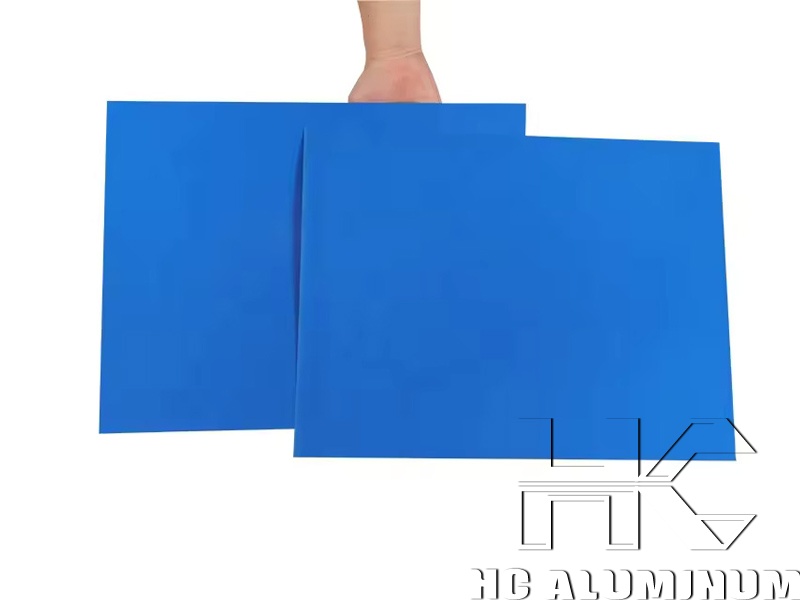
Not all CTCP plates are built the same. Single-layer products can be attractive for straightforward commercial work because they are economical and easy to process. Double-layer products usually offer stronger anti-scratch behavior, better chemical resistance, and improved press latitude. If a client frequently handles long runs, dense solids, or challenging press environments, a Double Layer CTCP Plate may be the better technical choice despite a slightly higher unit cost.
As an illustrative example, consider two offset printers producing similar A2 promotional material. Printer A runs short-to-medium jobs with disciplined processor maintenance and standard ink coverage. A quality single-layer CTCP plate may be perfectly adequate. Printer B operates longer jobs, pushes higher press speeds, and works in a hotter environment with heavier solid coverage. In that case, a double-layer plate often provides more stable production and fewer disruptions.
5. Batch Consistency and Supply Reliability
This is the factor that purchasing departments and production managers care about most after several months of cooperation. A plate may test well once, but can the supplier deliver the same sensitivity, coating weight, grain structure, and packaging standard repeatedly? Consistency from batch to batch reduces remakes, shortens calibration time, and protects press efficiency.
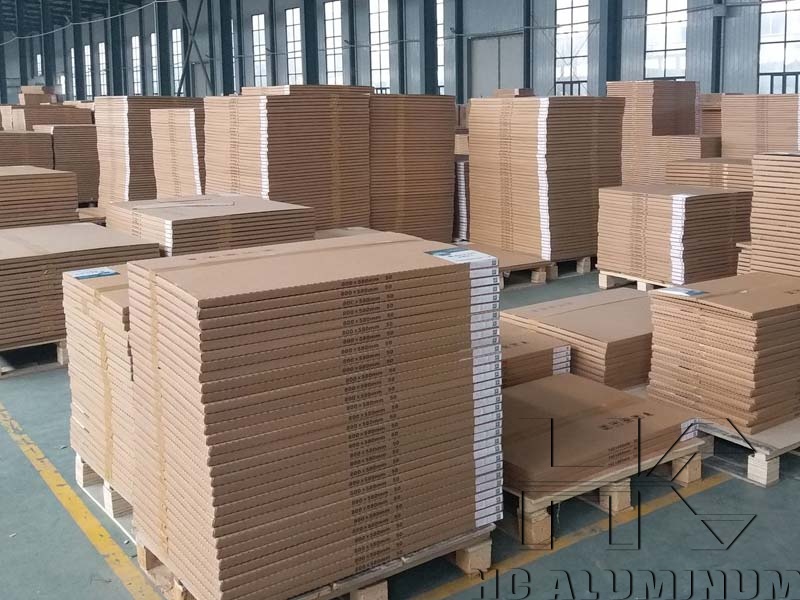
When evaluating Chinese suppliers, buyers should ask practical questions: What alloy and temper are used in the substrate? How is coating uniformity monitored? Is every batch tested for sensitivity, resolution, development performance, and run durability? What is the packaging method for ocean freight and humid destinations? Can the manufacturer provide stable lead time for standard sizes as well as custom sizes?
The strongest China CTCP plate manufacturers usually stand out in small but important details. Their plate surface is clean and even. Their packaging protects against moisture, edge damage, and transport vibration. Their technical team can discuss laser power, processor settings, developer recommendations, and storage conditions in a concrete way rather than speaking only in sales language.
For potential clients, it is also useful to think in terms of total printing cost rather than plate price alone. A plate that is slightly cheaper but causes re-imaging, background issues, or shorter press life is rarely the economical option. By contrast, a stable Chinese CTCP plate can improve startup efficiency, reduce waste sheets, and help standardize production across multiple jobs. That is where procurement becomes a production strategy, not just a purchasing exercise.
From a market perspective, China has become an increasingly important source of CTCP plate supply because manufacturers have invested in coating lines, substrate control, and export-oriented quality systems. Serious exporters now serve printers in Asia, the Middle East, Africa, Europe, and Latin America, adapting specifications to local press conditions and customer expectations. For buyers seeking a combination of technical performance, scalability, and commercial competitiveness, China is no longer viewed merely as an alternative source. It is often the primary sourcing option.
A well-selected China CTCP plate should deliver more than acceptable printing. It should create confidence at every stage of production: imaging, processing, mounting, startup, and long-run stability. That confidence is what printers ultimately buy. When the plate performs predictably, the entire workflow becomes easier to control, and the print business becomes easier to grow.
PRODUCTS
ONLINE CONSULTATION
If you have any questions, please contact us and we will contact you as soon as possible.


Leave A Message
If you are interested in our products and want to know more details, please leave a message here, we will reply you as soon as we can.