
News
Thermal CTP plates are high-performance printing plate materials used in the printing industry, widely applied in offset printing. Their core technology is based on the properties of heat-sensitive materials, making the plate-making process more efficient and environmentally friendly before printing. Thermal CTP plates are widely used in various printing fields such as books, magazines, packaging, and labels, performing particularly well in the commercial and high-quality printing markets. With the continuous development of digital printing technology, the market demand for thermal CTP plates is also continuously growing.
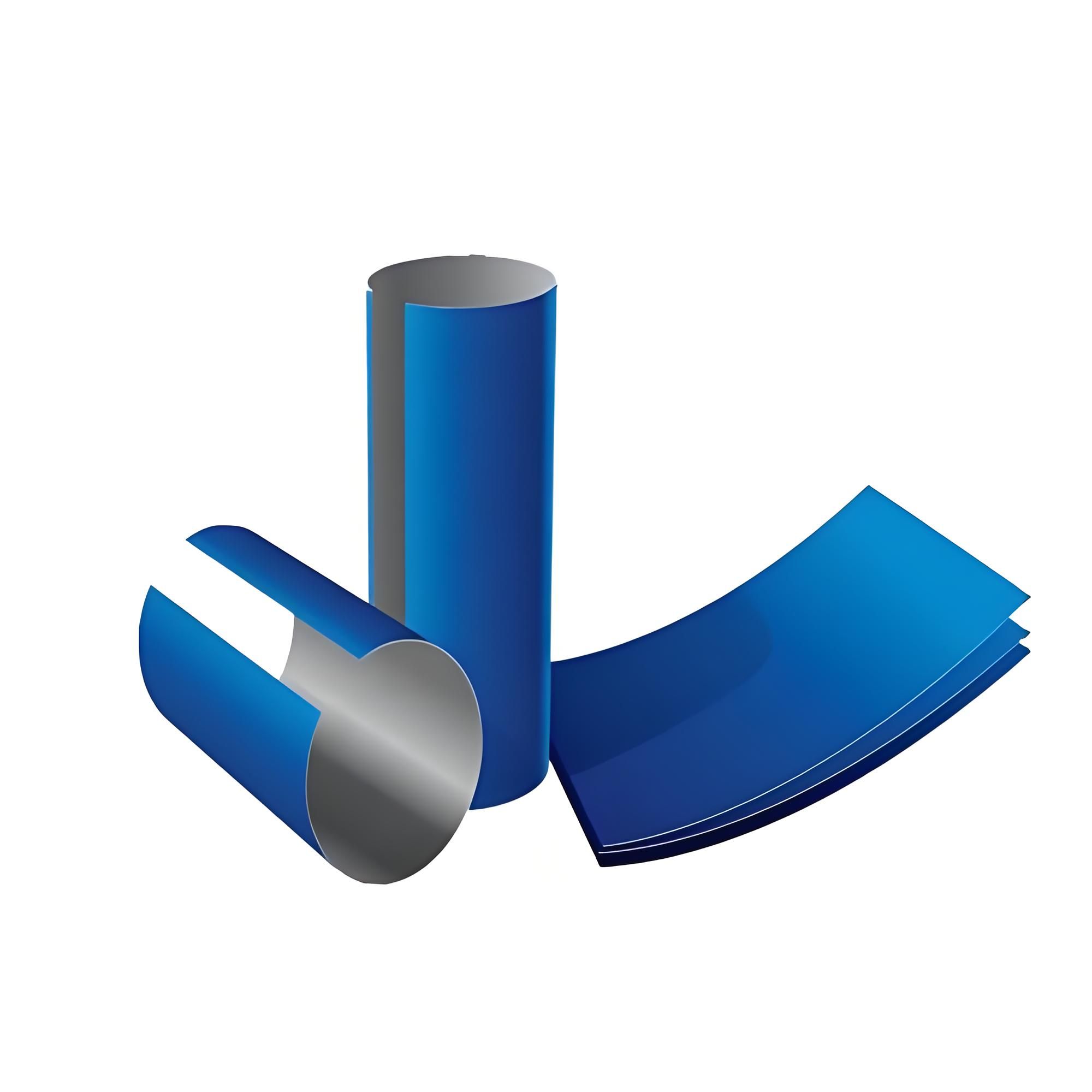
Technical principle of thermal CTP plates:
The imaging essence of thermal CTP plates is a "thermal-driven selective peeling/curing reaction." The core principle is as follows: When the infrared laser (typically 830nm wavelength) of the prepress equipment irradiates the printing plate, the laser energy is efficiently absorbed by the thermal agent in the plate coating and instantly converted into heat energy. The local temperature rises to 200-300℃ within tens of microseconds. This temperature threshold precisely triggers a specific reaction in the coating—depending on the type, either the polymer resin in the photosensitive layer undergoes chain-breaking degradation, forming small molecules that can be dissolved by the developer (positive thermal plate); or the cross-linking agent in the coating is activated, causing the resin to rapidly polymerize and solidify, forming an anti-development image area (negative thermal plate).
The biggest technical feature of this heat-based imaging method is its "decoupling from visible light." Traditional photosensitive CTP plates require strict control of ambient light interference, while thermal plates can be operated under ordinary indoor light. This saves printing plants the cost of darkroom construction and light-protected operation, which is one of the key reasons why it can quickly replace traditional plates. Based on our production data, the imaging resolution of our thermal CTP plates can reach a maximum of 250 lpi, with dot reproduction errors controlled within 0.5%. This is thanks to the precision of thermal focusing—the spot diameter of the infrared laser can be compressed to below 10 μm, far exceeding the focusing precision of ordinary ultraviolet light.
Structure of thermal CTP plates:
A high-quality thermal CTP board is not simply a "substrate + coating" structure, but rather a precision composite of four layers: substrate, bottom layer, photosensitive layer, and protective layer. The technical parameters of each layer directly affect the final printing effect, which is why we focus on controlling these aspects during production.
1. Substrate:
Our substrates are all made of high-purity aluminum alloy strips (purity ≥ 99.5%), processed through 12 steps including cold rolling, annealing, and electrolytic polishing. The key technical points lie in controlling the flatness error of the substrate to within 3μm/m, while maintaining a stable surface roughness (Ra) of 0.2-0.4μm. This roughness range ensures both the adhesion between the coating and the substrate (peel strength ≥1.5N/cm) and prevents ink leakage during printing. Furthermore, the substrate edges are rounded (R≥0.5mm) to prevent scratching the equipment rollers during assembly.
2. Bottom layer:
The bottom layer, located between the substrate and the photosensitive layer, primarily consists of modified polyester resin and titanium dioxide nanoparticles (50nm particle size). Its core technical functions are twofold: first, it blocks the diffusion of aluminum ions from the substrate into the photosensitive layer (aluminum ions reduce the activity of the heat-sensitive agent); second, it improves the thermal energy utilization rate of the photosensitive layer—the titanium dioxide particles reflect infrared laser light back to the photosensitive layer, creating a "double heating" effect within the coating, resulting in a more complete imaging response. By adjusting the thickness of the substrate (3-5μm) and the dispersion of nanoparticles (dispersion uniformity ≥95%), we can improve the dot reproducibility of the printing plate by 10%-15%.
3. Photosensitive layer:
The photosensitive layer is the core technology of thermal CTP plates. Our formula has undergone over a thousand iterations, and the photosensitive layer of our current mainstream products consists of four parts: "thermal initiator + resin binder + crosslinking agent + pigment". The most critical technological highlight is the selection of the thermal initiator—using a self-developed bisphenol A type thermal initiator, whose infrared absorption peak precisely matches the 830nm laser, with a molar absorption coefficient ≥10^4 L/(mol·cm), enabling energy conversion in an extremely short time. Simultaneously, the resin binder uses a styrene-maleic anhydride copolymer. By adjusting its molecular weight (controlled between 5000-8000), we can balance the alkali resistance (resistance time in developer ≥30s) and printing durability (over 100,000 impressions in conventional printing).
4. Protective layer:
The protective layer, made of water-soluble polyvinyl alcohol resin, is only 1-2μm thick, yet it achieves three major functions: First, it is scratch-resistant, with a pencil hardness of H, preventing scratches on the printing plate during transportation; second, it is oxidation-resistant, isolating the plate from air and moisture, extending its shelf life to 18 months at 25℃ and 50%RH; third, it is easy to clean, as the protective layer is quickly dissolved by the developer during development, leaving no residue that could affect imaging. In production, we use an online coating thickness gauge to control the thickness error of the protective layer to within ±0.1μm, ensuring stable performance.
Technological advantages of thermal CTP plates:
From both the manufacturer's and user's perspectives, the technological advantages of thermal CTP plates are not only reflected in performance parameters but also translate into increased efficiency and reduced costs in actual production. This is the core reason why they have become the mainstream in the current prepress market.
1. High stability:
Thermal imaging does not rely on ambient light, meaning printing plants do not need to build darkrooms or strictly control lighting during operation. This directly reduces the scrap rate caused by light interference (our customers report that the scrap rate has dropped from 3%-5% with photosensitive plates to below 0.5%). Simultaneously, thermal plates are more adaptable to temperature and humidity, and can be stored and used normally in environments of 10-35℃ and 30%-70%RH, eliminating the need for additional temperature and humidity control equipment, making them particularly suitable for small and medium-sized printing plants.
2. High print durability:
Thanks to the cross-linked curing structure of the photosensitive layer and the strengthened substrate treatment, our thermal CTP plates achieve a standard print durability of 100,000-150,000 impressions, with enhanced products developed for packaging printing reaching over 300,000 impressions. This means that in long-running printing orders, frequent plate changes are unnecessary, reducing downtime (each plate change takes approximately 15-20 minutes) and lowering plate consumption costs. Data shows that packaging plants using enhanced thermal CTP plates can reduce plate changeovers by 3-4 times for orders of 500,000 print runs per batch, improving overall efficiency by approximately 12%.
3. Environmental friendliness:
The developer solution for thermal CTP plates typically has a pH value between 10 and 11, making it weakly alkaline. Compared to the strongly alkaline developer solution (pH≥13) used in photosensitive plates, this results in less environmental pollution and reduces wastewater treatment costs by over 40%. Furthermore, our products utilize a chromium-free passivation process, ensuring the substrate surface is free of hexavalent chromium and other heavy metals, complying with EU RoHS standards and China's green printing certification requirements. Currently, over 80% of food packaging printing plants choose our thermal CTP plates, primarily because their environmental performance meets the stringent requirements of food packaging.
4. Compatibility:
Our thermal CTP plates have undergone compatibility testing with mainstream CTP equipment brands such as Heidelberg, Kodak, and Fuji, achieving stable imaging with external drum, internal drum, and flatbed presses. To address the differences in laser power across various devices, we have launched two series: "High Sensitivity" and "Standard Sensitivity." The High Sensitivity series can achieve normal imaging at a laser power of 50mW, suitable for upgrading older equipment; the Standard Sensitivity series achieves more accurate dot reproduction at 100mW power, adapting to high-end printing needs. This compatible design allows customers to upgrade their printing plates without replacing their equipment.
As a thermal CTP plates manufacturer, we not only provide high-quality printing plates but also hope that customers can maximize their performance. Here are some key usage precautions: First, avoid stacking too high during storage (recommended stacking height ≤ 100 sheets) to prevent substrate deformation; second, control the development temperature between 25-28℃. Excessive temperature can lead to dot loss, while insufficient temperature may result in incomplete development; third, it is recommended to preheat the printing plate before printing (50℃ for 5 minutes), which can improve printing durability by approximately 20%.
In summary, the core technology of thermal CTP plates is "achieving precise imaging through thermal energy." Their synergistic four-layer structure, low environmental dependence, and excellent printing performance make them an inevitable trend in prepress technology development. We consistently adhere to technological innovation as our core principle, pursuing excellence in every aspect, from substrate selection to coating formulation, with the aim of providing customers with "stable, efficient, and environmentally friendly" prepress solutions. If you have specific application scenarios or technical questions, please feel free to contact our technical team; we will provide one-on-one customized services.
PRODUCTS
ONLINE CONSULTATION
If you have any questions, please contact us and we will contact you as soon as possible.


Leave A Message
If you are interested in our products and want to know more details, please leave a message here, we will reply you as soon as we can.