
News
In the process of the offset printing industry's transformation towards green and efficient production, the technological breakthrough of process free offset printing plates has restructured the traditional plate-making logic. As a professional manufacturer deeply involved in offset printing plate manufacturing and export, we start from the essence of the technology, systematically analyzing its core principles and application advantages, providing global printing companies with the optimal solution for cost reduction, efficiency improvement, and compliance upgrades.
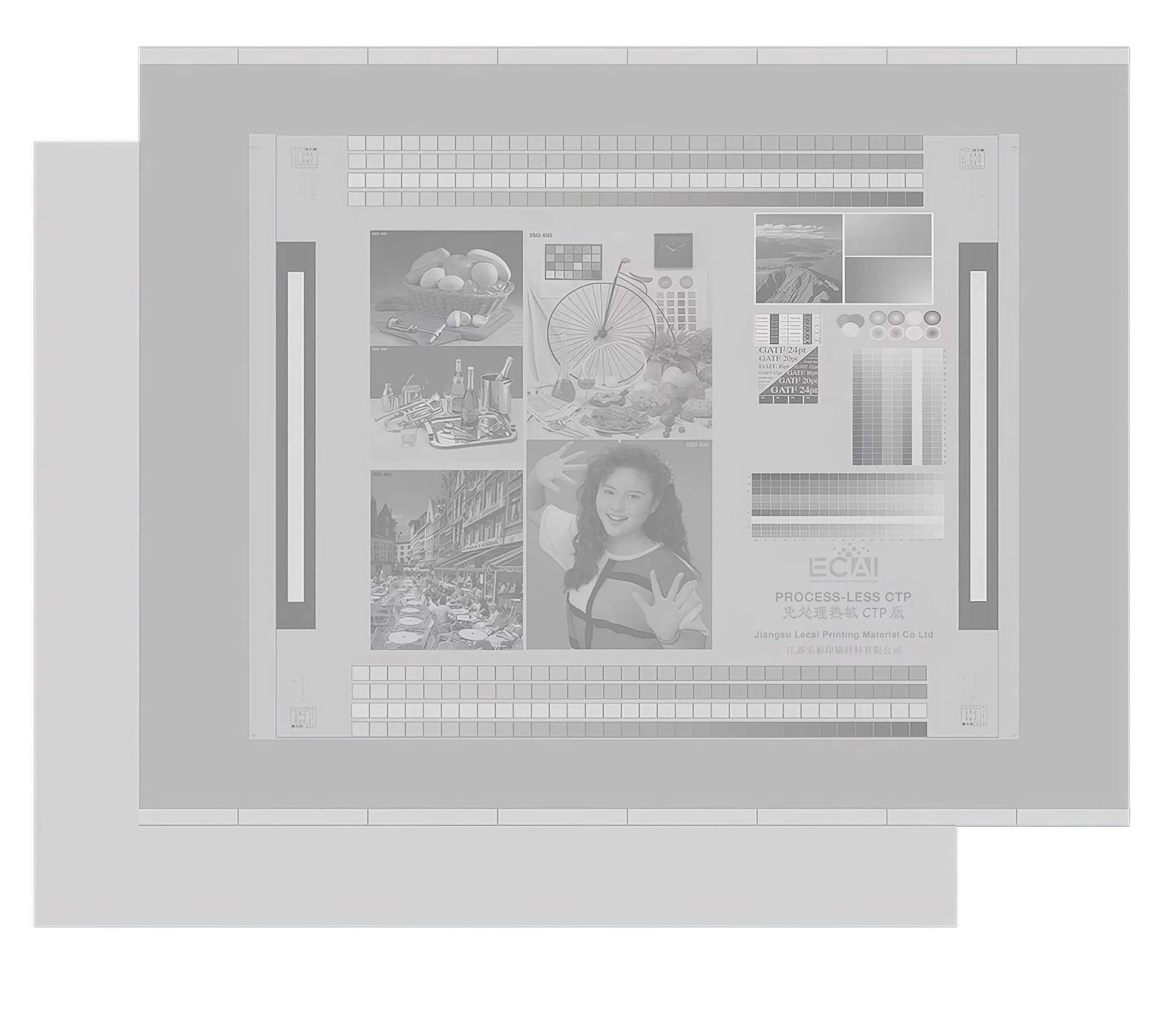
The core innovation of process free offset printing plates lies in the synergistic optimization of coating materials and imaging mechanisms. It adopts a single-layer thermosensitive polarity conversion coating design, using an aluminum substrate as a carrier, with the coating body being a functional polymer with hydrophilic properties. During imaging, the infrared laser emitted by the CTP equipment precisely acts on the image area, and the laser energy causes the polymer molecules in that area to undergo polarity reversal, changing from a hydrophilic state to an ink-philic state; the unexposed blank areas retain their original hydrophilic properties, directly forming a clear hydrophilic/ink-philic separation structure of the image without any chemical developer washing. Compared to traditional ablation-based, process-free printing plates, this technology completely avoids the damage to the optical components of the equipment caused by ablation debris. Simultaneously, through optimization of the nano-grit structure, the coating's water retention capacity is increased by 50%, providing a stable guarantee for ink-water balance during printing.
From a practical application perspective, the advantages of this technology are reflected in four dimensions: environmental protection, cost, efficiency, and quality, all supported by precise data. In terms of environmental protection, by completely eliminating developing chemicals, wastewater discharge can be reduced by 100%, and VOC emissions by 95%. Medium-sized printing plants can reduce their annual waste chemical disposal by nearly 6,000 liters, easily meeting international environmental regulations such as the EU REACH. Regarding cost control, although the unit price of a single printing plate is slightly higher by 15%, the overall cost can be reduced by 20%—saving on developing solution (approximately 0.8 RMB/㎡ in traditional processes), investment in and maintenance of washing equipment, etc., allowing medium-sized enterprises to save over $190,000 in costs over five years.
The dual improvement in efficiency and quality further highlights the technology's competitiveness. In the plate-making process, eliminating the developing step improves single-plate processing efficiency by 35%. The traditional 8-12 minute developing time per plate is completely reduced, allowing plates to be directly used after imaging, significantly shortening the delivery cycle for urgent orders. Regarding quality stability, the technology eliminates the influence of variables such as developer activity and temperature, achieving 1%-99% dot reproduction accuracy and significantly improving printing color consistency. After adopting this technology, the German newspaper Dewezet successfully joined the international elite club of newspaper color quality, maintaining stable quality even with an annual print run of 260,000 copies. Furthermore, the latest generation of products, through coating contrast optimization, is compatible with the registration requirements of conventional perforation machines, boasting a printing durability of over 400,000 impressions, fully covering the mainstream needs of commercial printing and newspaper rotary printing.
This technological iteration of process free offset printing plates not only simplifies the plate-making process but also provides core support for the sustainable development of the printing industry. Leveraging our core coating formula and precision manufacturing processes, we ensure stable and controllable product performance, providing reliable solutions to over 6,000 printing companies worldwide. Choosing no-rinse technology means choosing a path of coordinated development that combines compliance assurance, cost advantages, and quality upgrades.
PRODUCTS
ONLINE CONSULTATION
If you have any questions, please contact us and we will contact you as soon as possible.


Leave A Message
If you are interested in our products and want to know more details, please leave a message here, we will reply you as soon as we can.